During the initial twelve months following birth, infant feeding schedules dictate much of a household’s cadence. Clinical guidelines from the American Academy of Pediatrics and public health organizations indicate that newborns typically nurse between eight and twelve times across a 24-hour cycle. In practical terms, this requires feeding an infant roughly every two to three hours around the clock. Under such conditions, everyday clothing ceases to be a purely aesthetic consideration; it functions as essential utility equipment.
The physical landscape of early motherhood involves rapid tissue changes, fluctuating fluid levels, and frequent bodily contact. A garment worn continuously against the chest must accommodate tenderness and unpredictable supply variations without causing localized constriction. When apparel fails to meet these practical physical needs, the daily friction of caring for a newborn compounds rapidly.
The Functional Mechanics of One-Handed Hardware
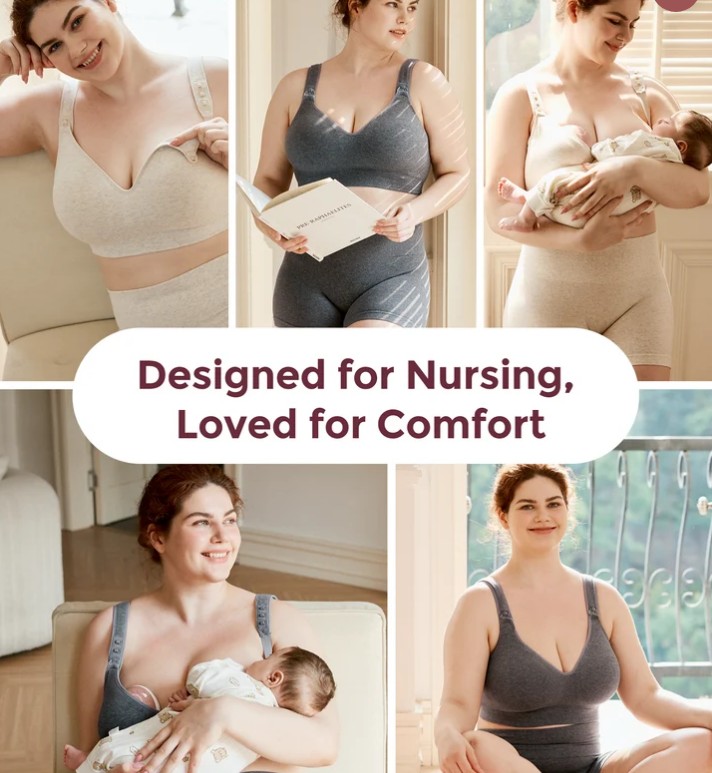
A clear test of utility occurs in dimly lit rooms during late-night feedings, often while a caregiver balances an unsettled infant with one arm. Fasteners requiring two hands, fine dexterity, or visual alignment become an immediate hindrance.
Hardware engineering in maternity apparel must account for real-world neuromuscular constraints. Fasteners featuring intuitive tactile guides allow quick detachment and re-attachment without visual confirmation. An easy to use nursing bra relies on simple mechanical releases that remain secure under gentle movement yet disengage smoothly under the pressure of a single thumb and forefinger. Minimizing mechanical resistance reduces disruptions during feeding sessions and prevents parental frustration during high-fatigue moments.
Textile Selection and Dermatological Breathability
Hormonal shifts following delivery, particularly the sharp reduction in progesterone and estrogen, frequently trigger postpartum diaphoresis-commonly experienced as night sweats. Combined with breast milk leakage and heightened surface warmth from sustained skin-to-skin contact, moisture accumulation against the chest can lead to skin chafing and superficial irritation.
Dermatological guidance frequently prioritizes natural, porous textiles for individuals experiencing sensitive skin conditions or persistent perspiration. While petroleum-based synthetic blends may offer mechanical stretch, they often lack the vapor permeability necessary to keep skin dry. Garments constructed with breathable cotton fibers provide superior moisture regulation, allowing airflow around delicate tissues and reducing the microclimatic humidity that fosters friction.
Navigating Size Fluctuations Without Restrictive Elements
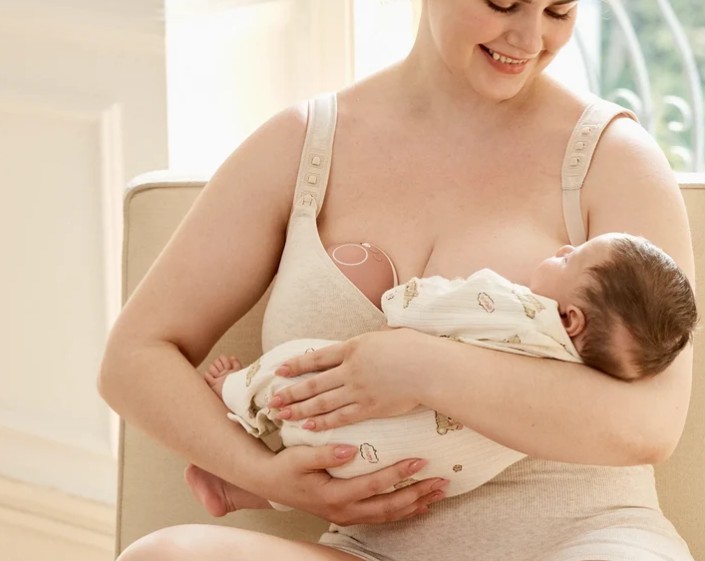
Breasts rarely maintain a static volume during the first year of lactation. Size expands markedly before an infant feeds and decreases noticeably immediately after. Furthermore, over the course of the postpartum recovery journey, baseline ribcage circumference and tissue density gradually shift.
Traditional brassiere construction relies on rigid underwires and precise, static cup measurements to provide shape. However, lactation consultants and health organizations caution against rigid underwires in early lactation, as concentrated pressure on milk ducts can increase the incidence of plugged ducts. While a standard nursing bra buying guide often suggests measuring chest circumference at fixed intervals, day-to-day usability requires adaptive construction. Flexible chest bands and multiple rows of hook-and-eye closures permit continuous micro-adjustments, accommodating natural physiological ebbs and flows without pinching.
Modern Hybrid Routines: Nursing and Pumping Considerations
Contemporary infant feeding regimens rarely adhere to a single mode. Many parents navigate a fluid balance between direct chestfeeding, manual expression, and regular sessions with breast pumps. In any realistic nursing bra comparison guide, evaluating how a garment transitions between these modalities is essential.
Bras with overly structured padding or removable foam inserts frequently present maintenance hurdles. Removable pads tend to fold, bunch, or shift during nursing access and frequently warp in household washing machines. Integrated designs-such as fixed molded cups-help retain modesty and structural neatness without requiring parents to manually untangle foam inserts after every wash cycle.
Examining Applied Design: Material and Clasp Calibration
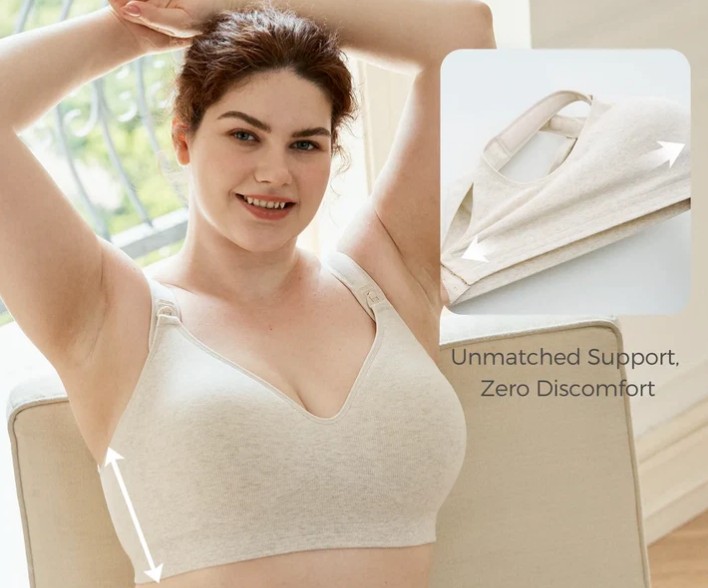
Evaluating how these parameters function together is evident in focused product designs across the maternity apparel sector. For example, the Momcozy Busty Cotton Nursing Bra illustrates an engineering balance centered on daily usability rather than excessive structural rigidity.
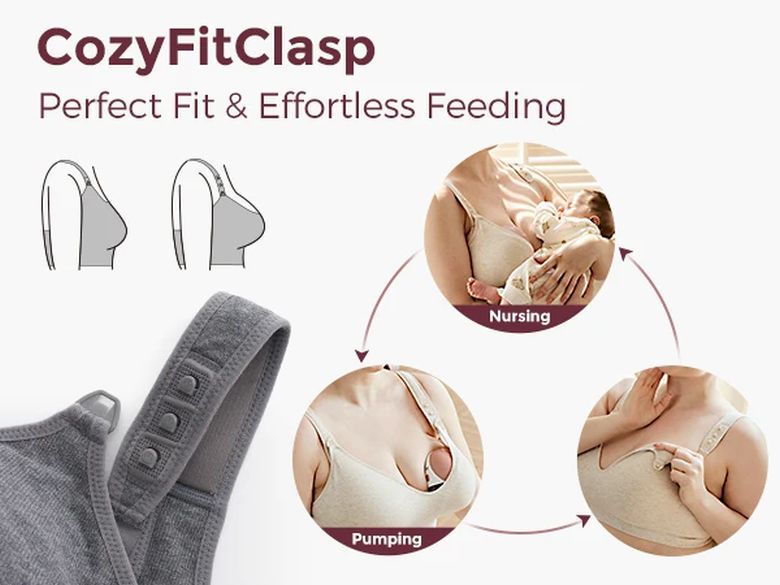
Rather than utilizing rigid shaping components, this design incorporates Premium U.S. Cotton Fabric to prioritize breathability and softness against reactive skin. Its hardware layout employs a CozyFitClasp Adjustable Design, facilitating one-handed access while allowing the band fit to be altered across four rows of adjustments as ribcage measurements fluctuate throughout postpartum recovery. Rather than promising rigid correction or high-impact athletic hold, the construction targets steady, pressure-free daily wear through fixed molded cups and a wide elastic band that distribute weight without digging into the shoulders or diaphragm.
Laundering Realities and Sustainable Wear
A nursing bra undergoes more rigorous laundering than almost any other item in an adult wardrobe. Between spilled milk, spit-up, and heavy perspiration, these garments often run through washing machines several times a week.
Apparel that degrades quickly-such as elastic bands that lose recovery or clasps that snap under mechanical agitation-creates ongoing disruption for new parents. Ensuring that fabrics withstand repeated washes without losing elasticity is vital for long-term practicality. When an intimate garment performs reliably across months of heavy use, it recedes into the background, allowing parents to focus their attention entirely on the demanding journey of early infant care.